“New Wave Cabernet 50 Years on the Indian Ocean Coast” – Wine and Spirits, February 2018
People wear fewer clothes in a beach town. Margaret River is a place where T-shirts and board shorts rule. The cabernets of this surf culture share the same aesthetic: dressed down, physically pragmatic, their beauty tied to motion, equilibrium and grace.

What does motion have to do with wine? You might think of it as kinetic energy plus direction, two concepts that don’t often enter discussions about cabernet sauvignon. In Bordeaux, château proprietors often talk about the difference in the soil beneath their vines, the ratios of river stones, clay or sand that distinguish their wine’s expression from their neighbors’. In Napa Valley, there’s talk of soil, fog and prodigious ripeness, along with the grain of the oak barrels that aerates that ripe fruit to succulent grandeur.

In Margaret River, there is the wind, direct from the sea, separated from some cabernet vines by less than two miles of jarrah forest, a coastal landscape sustained by saturating winter rains and temperate, dry summers. Save for the winds, the competition from invasive plants, the hungry birds and the errant kangaroos, cows and other uninvited guests at harvest, there is no more copacetic place to grow great cabernet than Margaret River. Bill Minchin planted the first vineyard in what is now the Margaret River region. Like most of the pioneers, he was based in Wilyabrup, a three-hour drive south of Perth, in the northern third of a blunt promontory of land that juts out into the Indian Ocean on Western Australia’s coast. It’s 62 miles from north to south, bisected in the middle by the Margaret River, a creek running through the small town that shares its name; the region extends inland for 17 miles from the sea, but most all of the great cabernet vineyards fall in two neighborhoods: one west of town, in an area defined by Stevens Road (Cape Mentelle and Leeuwin Estate settled here early on, followed by Xanadu and Voyager), and Wilyabrup, west of Cowaramup and north of Margaret River, where the original vineyards clustered around Caves Road, barely two miles from the sea. You won’t likely find any of Minchin’s Merrifield cabernet. According to a history by Peter Forrestal and Ray Jordan published in 2017 (50 years after the earliest vineyards went into the ground), Minchin lost his first crop to possums and, later, after he’d given up on the vineyard, lost his stocks in a fire that destroyed the family home. Tom Cullity and Bill Pannell, two doctors from Perth, had better luck with their respective vineyards—Cullity at Vasse Felix and Pannell at Moss Wood. They’d both heard the buzz about the potential for viticulture in this untested region, driven by the state viticulturist, Bill Jamieson, who was busy promoting a paper by John Gladstones, a local agronomist. Gladstones posited that conditions in Margaret River were better suited to the vine than conditions in any of Australia’s established growing regions—the only caveat being the need for a site with well-drained soil, given the abundant winter rains.

Cullity, who was out digging soil pits on the weekend wherever anyone would allow it, found a parcel near Caves Road in Wilyabrup, but the owner wouldn’t sell. He got an assist from the local GP, Dr. Kevin Cullen, who was optimistic that vineyards might jumpstart the economy and raise the land values in the area. The intransigent owner of the land happened to work on Cullen’s cattle ranch, and Cullen convinced him to trade the eight-acre parcel Cullity wanted for 16 acres of the Cullen ranch. Then Cullen sold those eight acres to Cullity, who established Vasse Felix on the site. Pannell found 26 acres just to the north of Cullity; the Jupiters, Cullity’s new neighbors, planted vines on their ranch; and the Cullens eventually planted as well, forming the early nexus of Wilyabrup cabernet vineyards. The plant material came from Jack Mann and his son, Dorham, who tended cabernet sauvignon at Houghton in the Swan River Valley, northeast of Perth. Fifty years on, successive generations of those original selections have become a distinctive asset of Margaret River cabernet.

My First introduction to those vines came in the 1990’s. Ted Schrauth had grown up in New England, married a doctor from Perth, and settled there, exporting wines to the states and running fi shing expeditions with friends in the trade o Nantucket Island. Fishing was fi ne, but it was the promise of diving for abalone o the Margaret River coast that convinced me to head to Western Australia. At six a.m. one morning, Schrauth collected me and my duel from Leeuwin Estate and we headed to the beach. We donned wetsuits in a parking lot by the rocky shore and swam out to two massive underwater rock outcroppings, each forming the wall of a channel, where the abalone attached themselves, fattening up on bits of kelp ripped up by the waves. We had to battle the same currents that were feeding the abalone, and my haul was not quite up to Schrauth’s. Too busy catching my breath, then swimming down and trying to pry the creatures o the rocks, I didn’t notice that I’d scraped a gash in my ankle until towelling off.

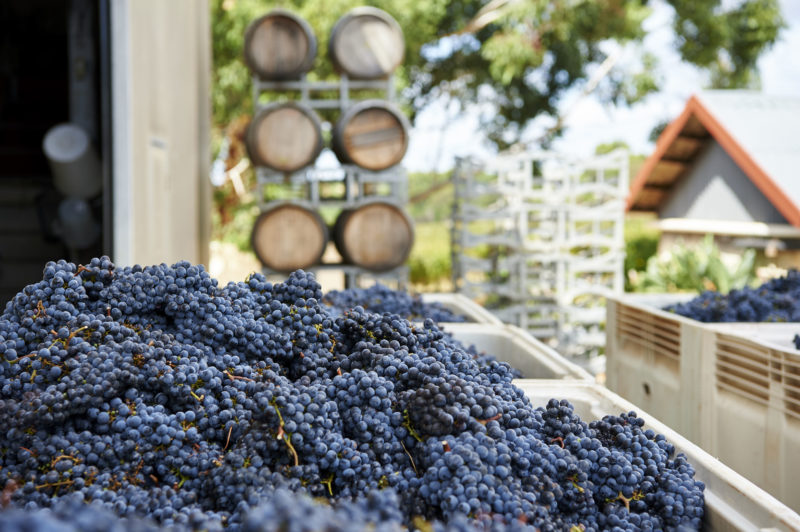
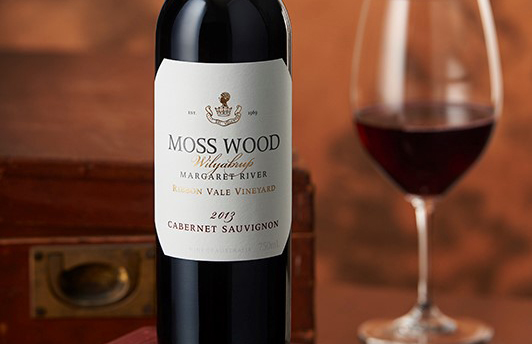
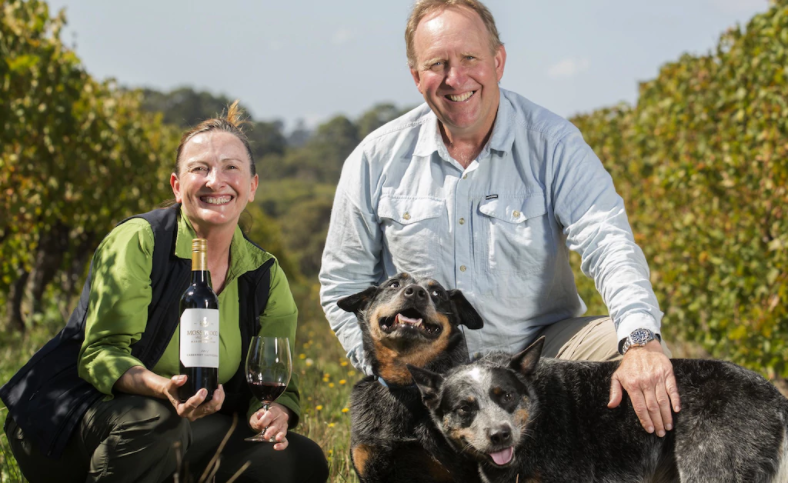
Schrauth drove us to Moss Wood for first aid. Inside the winery, a simple insulated steel structure with a cavernous door on the west side, Keith Mugford was by the tanks, wrestling with some hoses on the floor which is pretty much the same place I found him when I returned this past November, except the hoses were attached to a mobile bottling line that had backed up to the door. Expressing some relief that he didn’t need to bandage me up this time, Mugford led me out to the vineyard, a sheltered hillside facing north, toward the sun, and east, away from the wind. Within the 29 acres of vines, he still tends some of the original vines the Pannell family planted in 1969. He’s been here since 1979, staying on with his wife, Clare, to lease the property from the Pannells in 1984 and then buy it a year later. The relatively warm, sheltered site ripens cabernet more reliably than a parcel the Mugfords purchased one mile south. “When we bought Ribbon Vale in 2000, the tannins in the cabernet were often hard,” Clare told me as we drove to see it. The parcel is a long, narrow strip of vineyards with a grove of trees in the middle, which they planted to alleviate some of the wind stress on those vines. “Now that the trees provide some protection, we are getting better ripeness and softer tannins,” Clare said.

Back in his aging cellar, Mugford filled a glass from one barrel, the fruit of the short rows at the top of the hill, part of the 1971 planting at Moss Wood, then another from the long rows down the hill, the 1970 planting; the Pannells propagated those vines from the “super selection” of cabernet that Dorham Mann had developed, narrowing his father’s original selection of 29 vines down to five. The wine from the short rows tasted meaty and sweet, with long, graceful tannins. The cabernet from down the hill gave more cassis-driven fruit. And a blend from the “old block,” the original planting (including Jack Mann’s selection and Dorham’s super selection), was rich and spicy, with more openness to the tannins and beautiful red-berry fruitiness. I was thinking about these young wines the next day, at a retrospective tasting of Margaret River cabernet hosted at Vasse Felix. Moss Wood showed the 2005, a cabernet just hitting its stride. The ripe currant tones apparent in the barrel samples had gained resonance, while the wine still carried the energy and freshness of fruit grown on the Margaret River coast, the warm-cool of the sand and the surf, red spice and black fruit, complete and delicate.

Rating: Stars
Read More

Moss Wood at Matter of Taste New York

Moss Wood will be at Robert Parker Matter of Taste in New York this Friday 1st and Sunday 3rd of December, 2017.


Moss Wood at
Matter of Taste Margaret River
50 year anniversary dinner

Friday 1st December, 2017

Tribeca Grill
375 Greenwich Street, New York

Arrival Time: 7.30 pm
$450 USD per person

The dinner, hosted by wine writer Joe Czerwinski will feature
Moss Wood 2008 Cabernet Sauvignon

Moss Wood at
Matter of Taste Tasting

Sunday 3rd December, 2017

Conrad New York
102 North End Avenue, New York

Moss Wood 2014 Cabernet Sauvignon, Moss Wood 2013 Cabernet Sauvignon and Moss Wood 2015 Chardonnay will be available for tasting.

Rating: Stars
Read More

Ray Jordan “High five” – The West Australian, November 11th, 2017

Margaret River’s founding wineries share the pick of their stellar past.

The annual Margaret River Gourmet Escape indulgence will be a time for celebration and reflection. Margaret River turns 50 as a wine region this year, an occasion that is cause enough for celebration. From impoverished rural region with a few surfers and alternative life-stylers, to modern sophisticated wine region producing some of the world’s great wines, it has been a remarkable transformation.

Next week myself and co-author Peter Forrestal launch The Way it Was – a History of the Early Days of the Margaret River Wine Industry. The book examines the confluence of circumstances, people, events, cultural and social change that created the critical mass to give birth to a new industry.
In this week’s column, I asked the present custodians of five of the founding wineries to tell me the wine they believe the most important in their history, and why. I had my own views, which in the end were pretty much consistent with theirs. If you are lucky enough to have any of these wines, you are in possession of a priceless piece of  WA history.

MOSS WOOD (EST 1969)

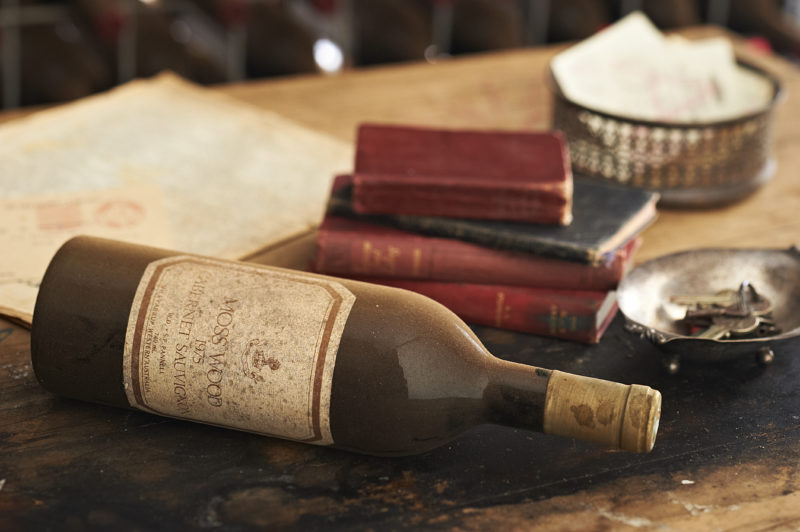
Keith and Clare Mugford, who bought this iconic boutique estate from founding owners Bill and Sandra Pannell, said it was a tough decision “but when push came to shove, we both agreed that 1975 and 1976 were very important in establishing the vineyard’s reputation and in the end, we chose 1975 Moss Wood cabernet sauvignon as pivotal. As a young wine, the 75 drew immediate attention to Moss Wood because of its fruit depth, complexity and tannin balance. Over the four decades since, no matter where it’s been tasted, the 75 has continued to meet and often exceed expectations. To have been lucky enough to have had such a wine, made off very young vines, by passionate but relatively inexperienced winemakers, speaks volumes, not just about our vineyard, but Margaret River as a whole.”

CAPE MENTELLE (EST 1970)

This famous estate, established by the Hohnen family, is now owned by the giant French company LVMH. Estate director Cameron Murphy said that “in the grand scheme of things for both Cape Mentel le and even for the region in those early years, I believe that the 1983 vintage Cape Mentelle cabernet sauvignon winning the second consecutive Jimmy Watson Memorial Trophy in 1984 was a game changer. It shone a spotlight on Margaret River and proved that the region, even as a teenager, should be taken seriously and could deliver the country’s best red wines, consistently.”

CULLEN (EST 1971)

This Margaret River producer is the oldest that is still in the same family who started it. Winemaker Vanya Cullen believes the Diana Madeline 2001, the first to carry her mother’s name, was the most important in the winery’s history. “It has gone on to become recognised as one of the great wines and the first Cullen wine to be sealed under a screw cap.”

VASSE FELIX (EST 1967)

Owner Paul Holmes a Court said without hesitation that the 1972 cabernet sauvignon malbec, the first red wine made by Tom Cullity at the region’s first commercial winery, was his choice. Along with a 1972 riesling, it provided compelling proof that the region had a future.

LEEUWIN ESTATE (EST 1973)

Little surprise that a chardonnay was chosen. Marketing and events co-ordinator Lucy Davis, granddaughter of Leeuwin founders Denis and Tricia Horgan, said that after some family discussion the 1981 chardonnay was their pivotal wine. “That was the wine which first threw the international spotlight on Leeuwin Estate and opened export markets after it received Decanter Magazine’s highest recommendation.”

Rating: Stars
Read More

“Keith riding high in two fields” by Frazer Guild 1981

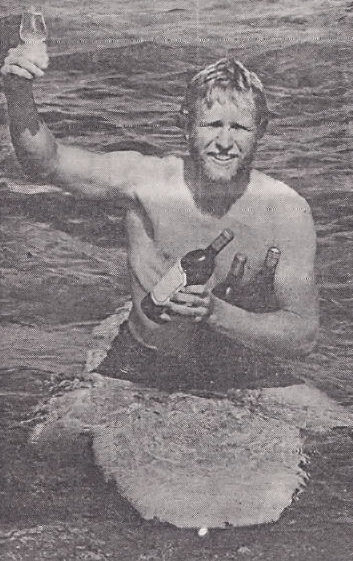
Surfer-winemaker Keith Mugford career is on the crest of a wave.


At 23, he is already producing award-winning wines at the Moss Wood, Willyabrup, vineyard.And the pleasure he gets from picking up prizes for wines is matched only by the thrill of picking up the big waves off the South-West coast.
At dawn, or after a long day at the vineyard where he is manager  and winemaker, Keith throws his surfboard into his utility and seeks out the swells.

“I don’t have as much time as I would like for surfing but the wine has to come first,” he says.

And it does.

The Moss Wood 1979 Cabernet Sauvignon won the top red wine award at the Adelaide Show and the 1980 Cabernet Sauvignon to be released later this year won a gold medal and trophy at the Perth Royal Show.
And Keith says the 1981 Cabernet Sauvignon to be released next year is even better. Keith was hired by Moss Wood owner Dr Bill Pannel. He has not let his early success go  to his head.

“The district is excellent for the production of wines,” Keith said. “The raw materials and the facilities we have are first- class.
“I can make minor improvements or adjustments, but basically I just have to make sure nothing goes wrong.”

He grew up in the McLaren Vale wine-growing area of South Australia and says he has enjoyed the opportunity to control a small-scale  vineyard rather than work on just one aspect of the winemaking process in a bigger operation.

“It was a good break and I appreciate the responsibility I have,” he said.

Keith said that though winning prizes and medals was satisfying, he regarded the shows as fun and a  chance to meet others in the industry.

“Some wines which you don’t really expect to do well pick up awards and others which you are proud of miss out” he said.
“As long as we know we are producing top quality wines, we are happy whether they are recognised at the shows or not.”

The Moss Wood 1981 Pinot Noir is already being whispered about as the best of its type produced in Australia.

Keith – a surfer for 12 years – says the waves along the South-West coast are as good as the wines. When he’s not working or surfing he fits in a game of golf, soccer or cricket. Then it’s time to relax with a drink. Moss Wood, naturally.


Rating: Stars
Read More

Screw cap closure and wine-preservation

At Moss Wood we exclusively seals our wines with the superior screw cap closure. We began the use of screw cap closures with our 2000 vintage of Moss Wood Cabernet Sauvignon and we quickly decided to extend to the whole range. More than 15 years of experience has allowed us to draw to the conclusion that screw cap closure provides a very satisfying ageing ability and consistency.

We were excited to read about a new wine-preservation system made for screw caps created by Coravin’s founder, Greg Lambrecht. It enables you to withdraw wine from the bottle without damaging the screw cap closure while preserving the remainder. We look forward to trying this new invention!


Read more about Moss Wood and screw cap closure

Read more on winemag.com


Rating: Stars
Read More

“Raise a glass”, PRIMOlife Perth – Fergal Gleeson

Moss Wood was founded in 1969 and has been owned and managed by Keith and Clare Mugford, two of the loveliest people you’ll meet, for the past 30 years or so. Over that time, they have carefully developed their range of wines while still being focussed on quality rather than volume.

Moss Wood is best known for its delicious cabernets which are excellent. Its merlot is also a contender for best in Australia.

Keith points out that Moss Wood was also a very early adopter in Australia of pinot noir and chardonnay. for which they’re highly regarded. The great wines of Burgundy are still the reference point for Keith, although he is not trying to recreate the Cotes de Nuits in Wilyabrup.The wines are true to their sense of place.

As a husband and wife winemaking team, Keith and Clare joke that they see a lot of each other but, as in ancient farming tradition, it works! Their philosophy is about keeping it simple. Keith emphasises that vintage conditions and the land have a much bigger impact than man-made interventions in determining the wine in the bottle. They know they’ve got some special vineyards and the mission is to make the best possible wine every year.

Moss Wood’s wine tasting tour at their cellars is highly regarded by wine buffs.You can taste wine from the barrel and tank and visit the museum for back vintages. Tastings are by appointment only.

Rating: Stars
Read More

Moss Wood Ribbon Vale 2013 Cabernet Sauvignon – The Drinks Business

Wine pairing with five “bizarre” Chinese dishes

‘Century eggs’ or ‘thousand-year eggs’ or simply ‘Pidan’ in Chinese are in fact not aged for a century or a thousand years. They are preserved eggs made in a saline solution mixed with clay and rice husks for a few months that changes yolk into grey/black colour and egg white into transparent brown/grey jelly. The dish is notorious because of the colour and its pungent smell that compelled Thais to give it another moniker – ‘horse urine eggs’.

Seasoned with soy sauce, chili and spicy green peppers, the dish is often served as a starter to work up your appetite, believe it or not.

Cindy Chan from Summergate opted for a Moss Wood Ribbon Vale Cabernet Sauvignon 2013 .

“Century egg with spicy green pepper is a dish with strong taste, with a bit of spiciness. This pairs well with a red wine that also has strong flavours to balance all the exciting flavours on the palate. Also Cabernet Sauvignon tastes a bit like the green pepper, with the peppery taste,” she commented.

Rating: Stars
Read More

Moss Wood Dinner in Adelaide at George’s on Waymouth – 6th June 2017

We are hosting a dinner featuring Moss Wood wines including the Moss Wood 2014 Cabernet Sauvignon in Adelaide at George’s on Waymouth on Tuesday 6th June, 2017 at 6.30pm.

Please book directly with George’s on Waymouth and pay at the time to secure your booking.


Tuesday 6th June 2017
Dinner
George’s on Waymouth

20 Waymouth St, Adelaide
Please contact George’s on Waymouth for bookings:
E: info@georgesonwaymouth.com.au
P:  +61 8 8211 6960

Arrival time: 6.30pm
Cost $140 per head  

The dinner will feature the following wines:

Moss Wood 2015 Semillon
Moss Wood 2015 Chardonnay
Moss Wood 2014 Pinot Noir
Moss Wood Ribbon Vale 2013 Merlot
Moss Wood 2015 Amy’s
Moss Wood Ribbon Vale 2013 Cabernet Sauvignon
Moss Wood 2014 Cabernet Sauvignon
Moss Wood 2001 Cabernet Sauvignon 

Rating: Stars
Read More

Moss Wood at London Wine Fair Margaret River Chardonnay Masterclass

A Margaret River Chardonnay Masterclass including Moss Wood was held at the London Wine Fair last week. The class was presented by Cath Oates, MRWA President attended by Murray McHenry of McHenry Hohnen Vintners
The class was attended by Murray McHenry of McHenry Hohnen Vintners and he says “I wish to convey to all eight wineries and our members of the first class presentation and insight given to our region by Cath.”
We would like to thank Cath Oats for her excellent representation of us all.
An article has been written about this event by Lucy Shaw in the Drinks Business
Rating: Stars
Read More

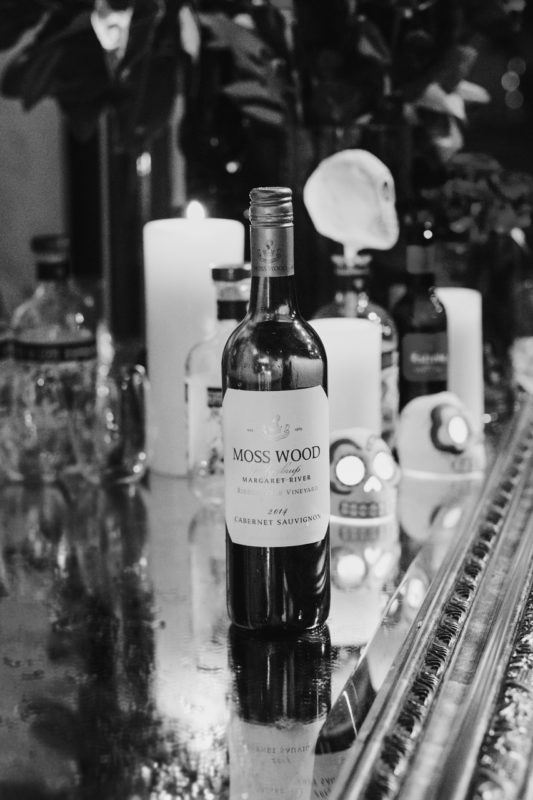
“Almost perfect” – Moss Wood 2014 Cabernet Sauvignon, Ray Jordan, West Australian

Almost perfect

This exquisite wine from Margaret River is as close to perfect as any Margaret River has produced – and it gets my highest-ever score.
Moss Wood’s Keith Mugford reckons that if he couldn’t make a good wine from the 2014 vintage he might as well give up.
Well, he and wife Clare sure have made a great wine – the best Moss Wood cabernet yet and a drop that I award my highest-ever score.

In what was a brilliant growing season, Mugford has created a near-perfect wine. He has captured all that is exceptional about Moss Wood cabernets: ethereal perfumes and refined palate profiles.
With the first sniff of the 2014, I was taken back to the 2001 and 2005, and the more distant 1975 – Moss Wood vintages that are among the greatest.
But this new release stands alone.

The wine follows the usual combination of predominantly cabernet sauvignon, with small amounts (4 per cent) of petit verdot and cabernet franc. Just 17 per cent of the French oak is new, showing that when you have great fruit sometimes less new oak is more.
And like most recent vintages, the slightly earlier picking dates have allowed Mugford to produce wines of slightly less alcohol, which contributes to the overall elegance and refinement.

So, my dilemma was: would I push my points to a score I have never given – a huge 99 out of 100.
I paced the room, arguing with myself. Eventually I said: “Stuff it, Jordan; be brave.” So, if you are at all serious about your cabernets, then this, even at $128 a bottle, is essential buying.
In stores from May 1 or order online at mosswood.com.au.

Moss Wood Wilyabrup cabernet sauvignon 2014
This is such a classic Moss Wood. As elegant and stylishly poised as any I have tasted through the years. Red berry and violets, with distinctive mulberry and cedar perfumes on the nose and that little oak influence. Such gorgeous perfume, which really makes this wine. The palate is balanced and refined with an elegance you only get in the very best of these wines. Wonderful integration of fine-grained, understated oak and fine, chalky tannins. Almost impossible to fault. A truly great wine and the best ever to come out of this magical region. 99/100 (Best drinking: 2020-50. Alc: 14%)


2022 marked the release of the 50th vintage of Moss Wood Cabernet Sauvignon.

Click here to read more about the history and evolution of this wine.

99 Points

Rating: Stars
Read More