
Moss Wood 2024 Amy’s
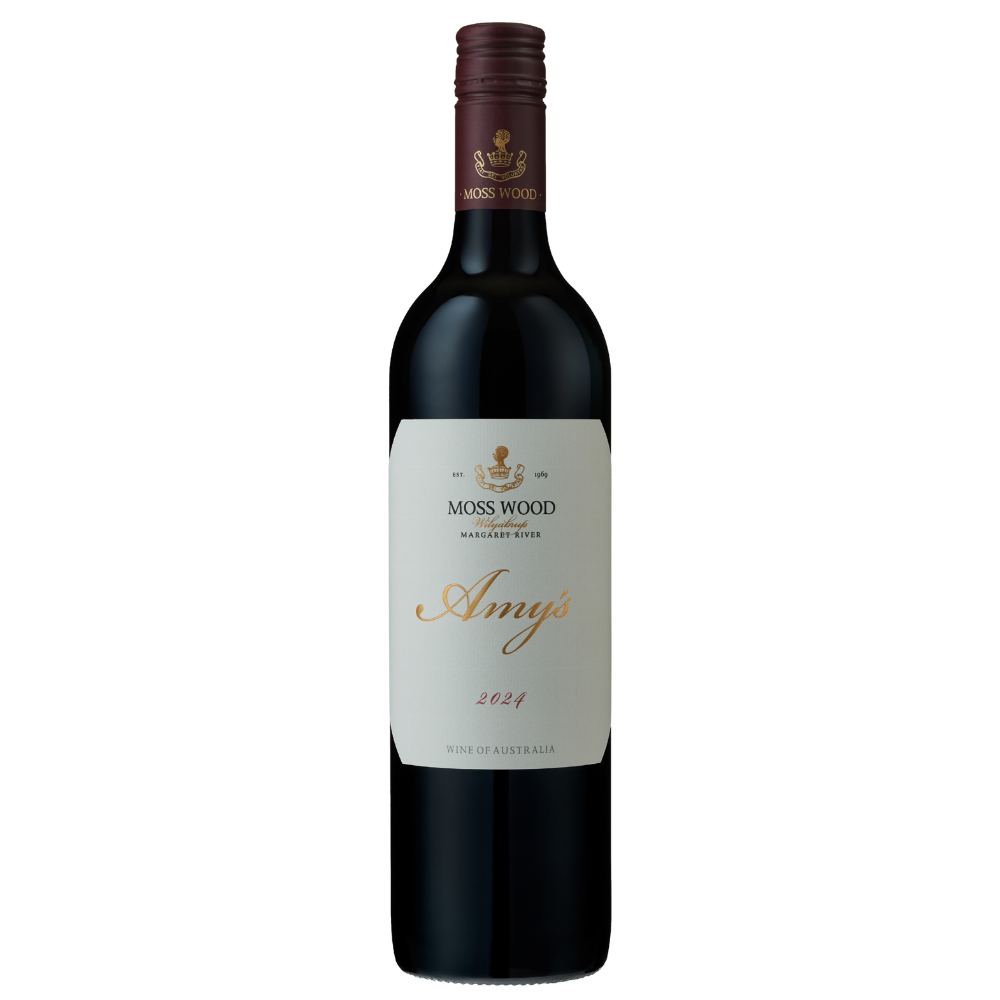
| Wine Facts | |
|---|---|
| Median Harvest Date | 28th February, 2024 |
| Median Harvest Ripeness | 13.1°Be |
| Blend | 72% Cabernet Sauvignon 11% Merlot 8% Malbec 9% Petit Verdot |
| Bottling date | 1st September, 2025 |
| Alcohol | 14.0 % |
Wine Facts
-
Median Harvest date
28th February, 2024
-
Median Harvest Ripeness
13.1°Be
-
Blend
72% Cabernet Sauvignon
11% Merlot
8% Malbec
9% Petit Verdot -
Bottling date
1st, September 2025
-
Alcohol
14.0%
Moss Wood 2024 Amy’s – Jane Faulkner – James Halliday, The Wine Companion
The combo of varieties turns out at 72/11/8/9% cabernet/merlot/malbec/petit verdot, and as is the Amy’s way, this is meant to be enjoyed with youth on its side. However, an extra year or so in bottle will see this come together better. Now it’s all upfront cassis and blackberries, pepperberry and…
Moss Wood 2024 Amy’s – Erin Larkin, The Wine Advocate
The 2024 Amy’s is supple, succulent and ultra-attractive. The season was hot, but those who managed it diligently have had good results, as this shows. The wines may not have the longevity of great vintages like 2023 or 2018, but they offer tremendous pleasure early. There are notes of raspberry…
Moss Wood 2024 Amy’s – Winsor Dobbin, Winsor’s Choice
Calling all lovers of Bordeaux-style red blends. This is cabernet-driven wine from one of Margaret River’s best producers that offers an excellent each way bet: drink now or cellar for a decade or more. It is a blend of 72% cabernet with the remainder of the blend made up of…
Moss Wood 2024 Amy’s – Sam Kim, Wine Orbit
Beautifully fruited and fragrant, the bouquet shows blackcurrant, blueberry, fennel, subtle tobacco, and elegant oak aromas. It’s succulent and supple in the mouth, delivering a fleshy texture, fine acidity, and chalky tannins, making it robust and sturdy, with excellent line and length. A blend of 72% Cabernet Sauvignon, 11% Merlot,…
Moss Wood 2024 Amy’s – Fergal Gleeson, Great Wine Blog
Amy’s 2024 is Moss Wood’s well-known Cabernet blend: 72% Cabernet Sauvignon with roughly equal parts Merlot, Malbec and Petit Verdot. It bursts with juicy freshness, offering red and black fruits along with tapenade. It finishes with satisfying Cabernet markers of tea, tobacco and leather. November, 2025
Moss Wood 2024 Amy’s – Gary Walsh, The Wine Front
It’s a bold and fruit forward wine offering blackberry, raspberry, dark chocolate, liquorice and a dried flower perfume. It’s fleshy and juicy in black fruit, mocha richness, a grainy grip to tannin, acidity is balanced, maybe has some orange nip to it, and finishes earthy, with a slight chicory bitterness,…
Moss Wood 2024 Amy’s – Huon Hooke, The Real Review
Deep dark purple-red; intense, essency cassis, dark plum, violets and toasty oak on the nose, the palate succulent and fruit-sweet, with almost lush presence and a touch of graphitey tannin on the finish. Full bodied, rich and ripe—an almost opulent wine. A little more time will soften it further. November,…
Moss Wood 2024 Amy’s – Ray Jordan, Wine Pilot
A blend of Cabernet Sauvignon, Merlot, Petit Verdot, and Malbec, this wine displays a deep, dark colour with subtle crimson hues. The nose is ripe with blackcurrant and plummy characters, complemented by a lifted aromatic perfume. On the palate, deep, succulent dark fruit flavours are supported by fine, firm tannins,…
Moss Wood 2024 Amy’s – Angus Hughson, The Vintage Journal
One of the better Amy’s, this is a blend of Cabernet Sauvignon (72%), Merlot (11%), Petit Verdot (9%) and Malbec (8%). Maturation was for sixteen months in French oak barriques, but the use of any new oak was avoided. Purple magenta in colour, the nose exhibits notes of black cherries,…
VINTAGE NOTES
The 2023/24 season was warm, dry and early - the warmest growing season in Margaret River since 2007. Conditions remained warm and dry from spring through to harvest, setting the scene for small crops and excellent ripeness. For many, it brought back memories of the mid-nineties, in particular 1995, when similar years produced wines of richness and structure.
Flowering took place under clear skies and warm temperatures, and from that point rainfall was minimal. Only 10mm fell from flowering through to harvest, leading to smaller bunches and reduced yields, but the fruit ripened evenly and remained in perfect condition. Cabernet Sauvignon and its blending varieties all reached full flavour ripeness at moderate sugar levels, delivering bright fruit and balanced tannins. The median harvest date for the Amy’s was 28th February, several weeks earlier than usual, with fruit picked at 13.1° Baume.
PRODUCTION NOTES
The fruit was hand-picked and delivered to the winery, where it was hand-sorted and destemmed. The must was then pumped into stainless steel closed fermenters and inoculated for primary fermentation. Pump-overs were conducted three times per day to enhance colour and flavour extraction. After 14 days on skins, the wine was pressed, and both primary and malolactic fermentation were completed in stainless steel tanks.
Following fermentation, the wine was racked to 228 L French oak barriques, none of which were new, and matured for a total of 16 months. In August 2025, the barrels were racked and blended in stainless steel. Fining trials were conducted to assess tannin balance, and the wine was found to require no fining. The 2024 Moss Wood Amy’s was then sterile filtered and bottled on 1 September 2025.
TASTING NOTES
Colour and Condition:
Deep brick red; bright condition.
Nose:
Lifted and perfumed, showing ripe blackcurrant, blueberry and plum, supported by hints of violet, red liquorice and dark chocolate. Subtle cedar, spice and tarry undertones provide depth and complexity.
Palate:
The palate carries generous berry and plum flavours with a rich, medium-full body. Fine, firm tannins sit neatly behind the fruit, giving length and balance, while a fresh acid line provides definition. The warm season’s concentration is evident in the wine’s density and depth, yet it retains the hallmark approachability that defines Amy’s.
CELLARING
Enjoyable now for its youthful vibrancy, yet will develop additional complexity with 8 to 10 years of careful cellaring.