
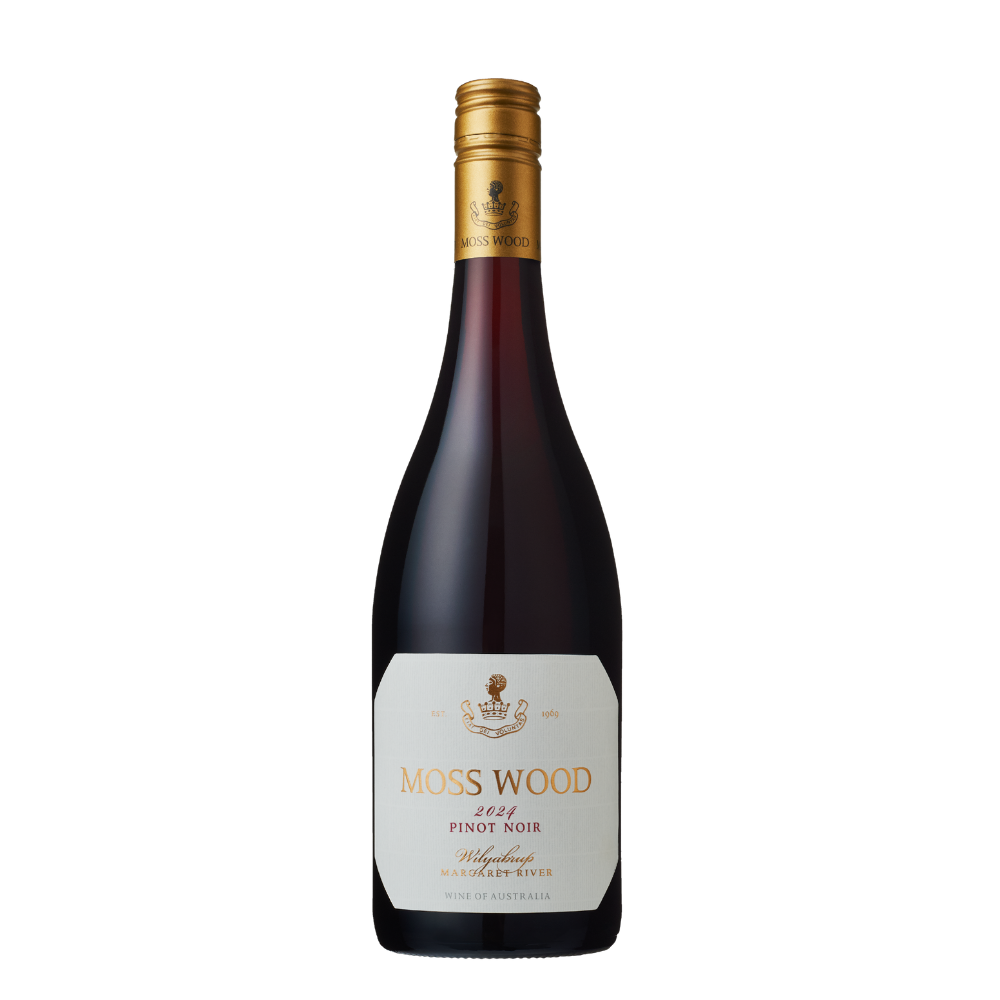
Moss Wood 2024 Pinot Noir
| Wine Facts | |
|---|---|
| Median Harvest Date | 30th January, 2024 |
| Mean Harvest Ripeness | 13.3° Be |
| Yield | 5.15 t/ha |
| Growing Season Ave Temperature | 20.32⁰C |
| Number of hours accrued between 18 and 28⁰C | 910 hours |
| Number of hours above 33⁰C | 56 hours |
| Days Elapsed between Flowering and Harvest | 94 days |
| Bottled | 3rd November, 2025 |
| Alcohol | 14.0 % |
Wine Facts
-
Median Harvest Date
30th January, 2024
-
Harvest Ripeness
13.3°Be
-
Yield
5.15 t/ha
-
Weather Data
Growing season Ave Temperature - 20.32⁰C
Number of hours accrued between 18° and 28⁰C – 910 hours
Number of hours above 33⁰C – 56 hours
-
Days Elapsed between Flowering and Harvest
94 days
-
Bottled
3rd November, 2025
-
Released
11th September, 2026
-
Alcohol
14.0 %
Moss Wood 2024 Pinot Noir – Fergal Gleeson, Great Wine Blog
Strawberries and cream, raspberry and cherry, are some of the fruit notes. Well behaved tannins add texture in a medium bodied wine with a bright lifted finish. Moss Wood’s dry grown Pinot vines are over 50 years old and that pedigree contributes to the intensity and depth in the…
Moss Wood 2024 Pinot Noir – Ray Jordan, Ray Jordan Wine
The first Moss Wood wine I ever tasted was a pinot back in 1981, so I have always had a soft spot for it. This fits snugly into the Moss Wood style, with plenty of generous, bright red fruit character on the nose and then delivered with a burst on…
Moss Wood 2024 Pinot Noir – Edward Agg, The Cellar Post
Bright ruby, with beautiful aromas of strawberry, raspberry, and rose, backed by earthy black tea, and baking spices. Medium-bodied and youthfully zesty on the palate. Strawberries, red cherry, ripe cranberries. The tension and focus are excellent in this release. Subtle spice notes beautifully complimenting the energy of the red berry…
More than 50 years after Pinot Noir was first planted at Moss Wood in 1973, we continue to work with the oldest Pinot Noir vines in Margaret River. The 2024 is our 48th release and marks the 47th consecutive vintage of the wine. That long history gives us a unique perspective on the variety, as we continue to learn from the vineyard and see how these old vines respond to the different conditions each season brings.
Vintage Notes
The 2023/24 growing season was an early one for Pinot Noir, characterised by warm, dry conditions and a relatively quick progression from flowering to harvest. While the season was warmer than average, it was not dominated by prolonged periods of extreme heat. Instead, consistent warmth and very low rainfall provided favourable ripening conditions and kept disease pressure to a minimum.
Rainfall for the calendar year was 910mm, around 11% below the long-term average. More significant was just how dry the growing season became. From flowering through to harvest, only 20.4mm of rain was recorded. Our dry-grown vines have deep root systems developed over many decades and are well equipped to cope with these conditions, although with so little rainfall during the growing season, we suspect they experienced some degree of water stress as the season progressed.
Conditions during flowering were generally favourable. Just 10.8mm of rain fell during this crucial period, providing good conditions for flowering and fruit set was solid. Temperatures provided more of a challenge, with eight days below 8°C and a minimum of 2.3°C recorded right in the middle of flowering. Although there was no significant frost damage, these cold conditions may have had some impact on fruit set and contributed to the eventual yield.
Once flowering was complete, the warm and dry conditions saw ripening progress quickly. Pinot Noir completed its cycle in just 94 days from flowering to harvest, compared with the long-term average of 103 days. The average temperature over this period was 20.32°C, modestly above the long-term figure of 19.7°C. The vines accumulated 910 hours between 18–28°C, comfortably within the range we consider favourable for photosynthesis and ripening.
Importantly, the season was not dominated by excessive heat. There were 56 hours above 33°C, slightly above the long-term average but well below the hottest recent seasons. The story of 2024, therefore, was more one of consistent warmth than extreme heat.
The median harvest date was 30th January, around three weeks earlier than average, with the fruit reaching 13.3° Baume. Despite the early timing, ripeness was slightly below the long-term average of 13.5° Baume, with the fruit reaching flavour maturity without excessive sugar accumulation.
Yield was 5.15 tonnes per hectare, around 16% below the long-term average of 6.1 t/ha. We believe vine age is now the major contributor to this gradual reduction in crop, with the exceptionally dry growing season and associated water stress likely providing an additional influence in 2024. The cold conditions during flowering may also have played a smaller role.
Overall, 2024 was an early, warm and dry season, but importantly not an excessively hot one. The moderate crop arrived at the winery in excellent condition, with good flavour concentration, freshness and balance.
Production Notes
All fruit was hand-picked and sorted before processing. Approximately 70% of the bunches were destemmed into small, open fermenters, with the remaining 30% included as whole bunches.
The must was chilled for a 48-hour cold soak before being allowed to warm naturally and seeded with multiple yeast strains for primary fermentation. Fermentation temperatures were controlled to a maximum of 32°C and each batch was hand-plunged three times per day. Each ferment was tasted regularly to monitor extraction and tannin balance before being pressed to stainless steel for completion of malolactic fermentation.
Once malolactic fermentation was complete, each batch was adjusted and racked to 228-litre French oak barriques, of which 17% were new. The wine remained in barrel for 18 months before being racked and blended in stainless steel. Fining trials were carried out but none improved the wine, so it remained unfined. It was then cross-flow filtered, membrane filtered and bottled on 3rd November 2025.
Tasting Notes
Colour and condition:
Medium to deep ruby hue; bright condition.
Nose:
Lifted and fragrant, with bright aromas of strawberry, red cherry and plum, together with rose petal and musky notes. The whole-bunch component adds an attractive spicy lift, with hints of clove and cinnamon sitting behind the fruit. As the wine opens, more complex earthy and mushroom notes emerge, with the French oak providing a subtle, toasty background.
Palate:
The palate is medium-bodied, with generous strawberry and cherry fruit running through its full length. There is good concentration without heaviness, with fresh acidity providing lift and firm but well-balanced tannins giving the wine structure and length. Plum, spice and earthy notes build through the middle and back palate, while the oak remains restrained and well integrated. The finish is long and composed, with the fruit, tannin and spice combining to give the wine excellent balance.
Cellaring
As is typical of Moss Wood Pinot Noir, the 2024 has generous fruit and good balance and can certainly be enjoyed as a youngster. However, underneath the bright fruit is the structure and complexity required for long-term cellaring.
Over the first decade, we expect the strawberry, cherry and plum characters to remain prominent while the tannins gradually soften. From around 10 years of age, the wine should begin to develop the bottle complexity typical of mature Pinot Noir, with the fruit joined increasingly by earthy, mushroom and savoury notes.
For those with the patience and cellar space, full maturity should be reached at around 20 years of age, and we expect the wine to continue to drink well beyond that.